

Kazakhstan's constitution reboot: Responsive authoritarianism with Kazakh characteristics
The new constitution promises a strong president, an influential parliament, and an accountable government. The first of those three is the only one the small print supports.

In an old tale of Aldar Kose, the beardless deceiver, a beloved trickster of the Kazakh steppe, the wanderer arrives at the abode of a wealthy man and asks a simple favour.
Might he rest his lamb among the rich man’s flock for the night? Of course, says the host.
But Aldar Kose adds a warning. He fears the larger animals might harm his lamb. The rich man laughs him off. Sheep don’t attack other sheep, he blusters, everyone knows that.
That night, under cover of darkness, Aldar Kose slips out to the flock, kills his own lamb, hides the carcass, and smears the blood across the mouths of the fattest rams. When morning comes, he returns to the pen, feigns horror at his lamb’s disappearance, and points to the evidence: the blood on the lips of his host’s own animals.
The rich man, confronted with what appears to be irrefutable proof of the impossible, hands over eight of his finest rams as compensation.
The outcome was never in doubt. Only the evidence needed arranging.
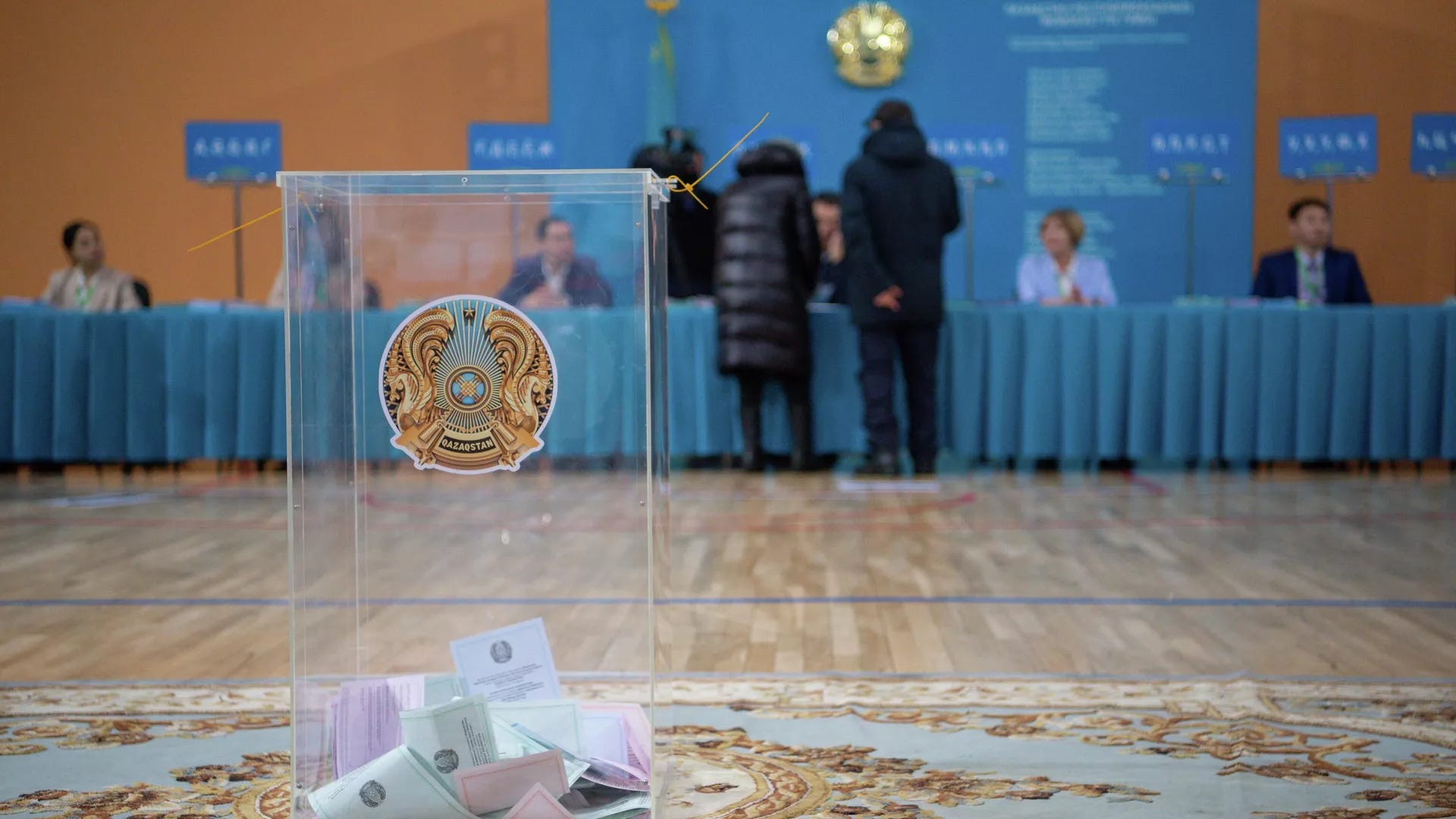
This weekend, Kazakhstan goes to the polls to vote on a sweeping new constitution, and the tale of Aldar Kose turns out to be a surprisingly reliable guide to how the country does referendums.
Identify an objective, contrive a putative hazard, engineer the outcome, then present the evidence as though it arranged itself. The blood on the lips of the rams is real, even if the hand that put it there is hidden.
The vast majority will vote in support of the change. That is hardly surprising. There was no debate, no conversation even. Sceptics have been harassed or jailed into submission.
There are three especially visible changes.
One is the streamlining of parliament into a single chamber, to be given the folksy name of Kurultai, meant to evoke the great councils of the Turkic steppe where chieftains gathered to choose their leaders.
Another is the creation of a vice presidency, an addition that will immediately spark speculation about succession in a country where the question of who comes next is a popular topic of political conversation.
The third, arguably most contentious, amendment grants the president unilateral power to appoint the chairs of the Supreme Court, Constitutional Court, Central Electoral Commission, National Bank, State Security Service and Human Rights Commissioner. If parliament rejects his nominees, including his nominee for the 145-seat Kurultai’s own speaker, twice, he can dissolve it and rule by decree in its absence.
Backers of the reform have pithily summarised it with the slogan: “Strong President, Influential Parliament, Accountable Government.”
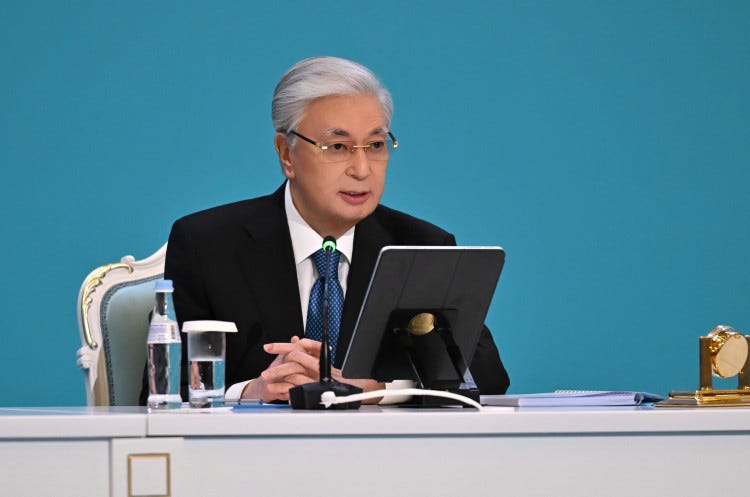
In making the case for a “yes” vote in the days running up to the referendum, President Kassym-Jomart Tokayev cast the decision in existential terms.
