



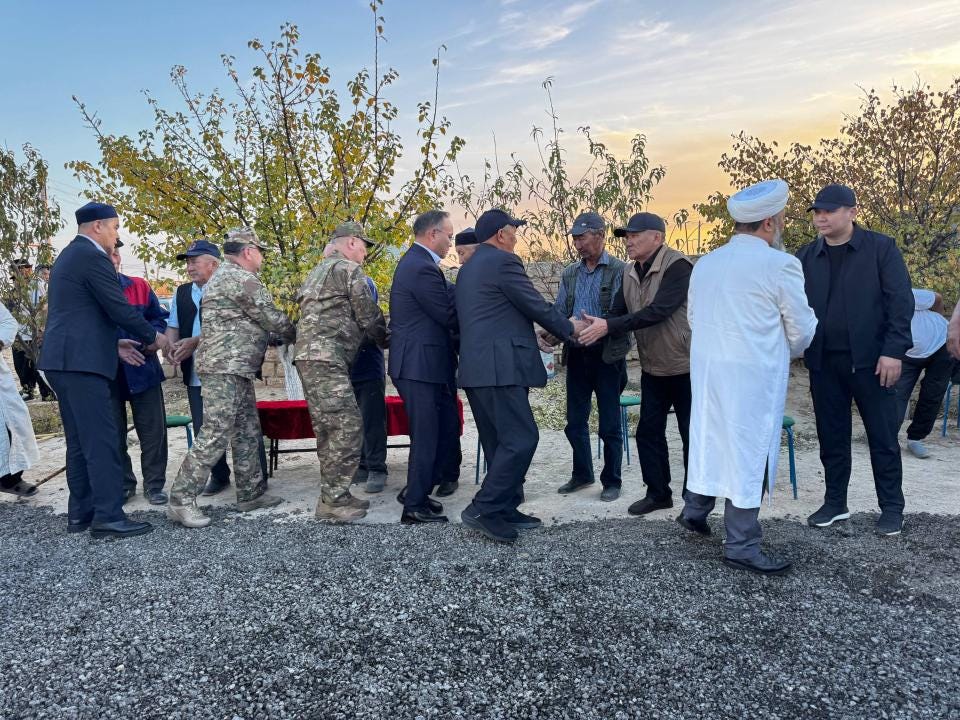
We began this week’s edition of the CAPS Unlock podcast with the deaths of 14 Kazakh servicemen during a naval exercise on the Caspian coast. Seventeen men were swept into the sea during an amphibious landing, but only three survived. The Defence Ministry initially attributed the disaster to a sudden deterioration in the weather, but weather forecasters had already issued a warning. President Kassym-Jomart Tokayev later said the servicemen had not been properly equipped with life jackets. Five officers have been detained, Defence Minister Dauren Kosanov has been removed, and two commissions are examining both the incident and the wider condition of Kazakhstan’s armed forces. The tragedy has revived arguments over military safety, compulsory service and whether lessons were learned after a similar fatal exercise in 2015.
Also, we considered Kyrgyzstan’s order for 10 freight locomotives from the U.S. company Wabtec. The purchase will renew almost a third of the national operator’s fleet and comes as Kyrgyzstan builds the China-Kyrgyzstan-Uzbekistan railway. Wabtec is American, but its regional manufacturing base is the LKZ factory in Astana, which it now owns outright. We trace that factory’s Kazakh, Russian and American history, and ask how the locomotive order fits alongside Chinese railway construction and Kyrgyzstan’s new transit-trade agreement with Pakistan. These projects reveal an emerging transport system built from American technology, Kazakh industry, Chinese infrastructure and access to South Asian ports.
For our interview, recorded during ASIAC Days in Almaty, we spoke to Aleksei Chigadaev, a doctoral candidate in political science at Freie Universität Berlin. His ongoing research treats Chinese e-commerce as a form of infrastructural power. Chinese companies may supply not only a product but also the marketplace, payment system, warehouse, delivery network and data storage behind the purchase. This makes trade more efficient and easier to regulate, but it may also leave Kazakhstan dependent on commercial systems controlled elsewhere.
Links
14 Dead on the Caspian: What Questions Has the Tragedy Posed for Kazakhstan’s Army?, Informburo
Kazakhstan’s Tokayev Dismisses Defence Minister After 14 Die During Naval Exercise, Reuters
Bodies of Two Missing Caspian Servicemen Found; Search Operation Completed, Kazakhstan Ministry of Defence
Kyrgyzstan Will Purchase 10 Mainline Freight Locomotives from the United States, Kabar
How Kazakhstan Is Poised to Drive Wabtec’s Growth in Central Asia, Wabtec
Work Proceeds on Tunnels for the China–Kyrgyzstan–Uzbekistan Railway, Kyrgyz Ministry of Transport and Communications
Joint Statement by the Leaders of Pakistan and Kyrgyzstan, Pakistan Ministry of Foreign Affairs


